Cute Tomato and Leaves Embroidery Review
As a designer who spends half my life staring at stitch charts and the other half troubleshooting tension issues on industrial machines, I have developed a certain level of skepticism when it comes to "cute" food-themed designs. Too often, these files are overly complex, relying on dense fill stitches that pucker lightweight fabrics or lack the structural integrity needed for commercial-grade products. However, after putting Cute Tomato and Leaves through its paces in several real-world scenarios, I found myself pleasantly surprised by its practicality and charm. This isn't just another generic clipart file; it is a well-considered machine embroidery design that balances aesthetic appeal with technical feasibility.
First Impressions: Mood and Visual Personality
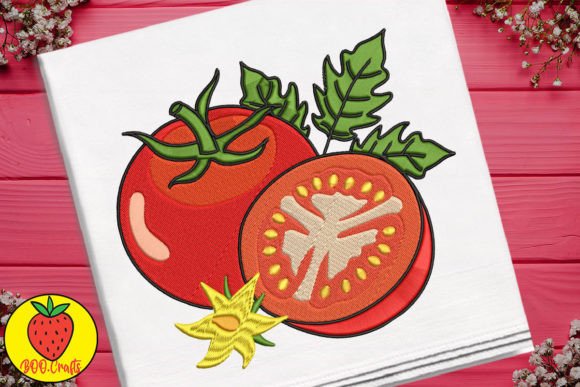
The moment you load this embroidery file into your software, the layout feels balanced. The subject matter—a stylized tomato surrounded by organic leaf shapes—creates an immediate sense of warmth and freshness. It evokes the feeling of a summer garden or a rustic kitchen table, which makes it incredibly versatile for seasonal branding. Unlike some designs that feel static or stiff, the leaves in Cute Tomato and Leaves appear to have a natural flow, suggesting a mix of satin and fill stitches that mimic the organic curves of real foliage.
From a visual standpoint, the design creates a mood that is both playful and grounded. It doesn’t scream for attention like a neon graphic might; instead, it invites the viewer in with a soft, approachable personality. This subtlety is crucial for high-end handmade product lines where you want the craftsmanship to speak for itself rather than overwhelming the garment’s silhouette. The color palette implied by the shape (reds, greens, and earthy tones) pairs effortlessly with neutral backgrounds, making it a safe yet stylish choice for custom apparel.
Real-World Application: Where Does It Shine?
I tested this design across a variety of substrates to see how it translates from screen to fabric. The results were particularly strong in the realm of lifestyle and home goods. For instance, when digitizing this concept for a line of kitchen towels or tea towels, the design’s scale worked beautifully. Placed in the corner of a white or cream linen towel, Cute Tomato and Leaves adds a touch of boutique flair without cluttering the functional space of the item. It elevates a basic utility item into a thoughtful personalized gift.
In the context of small business merchandise, this design is a powerhouse. I envision it performing exceptionally well on cotton canvas tote bags, where the sturdy fabric can support the weight of the stitches without excessive puckering. The theme aligns perfectly with farm-to-table brands, organic food stores, or local farmers' markets. Furthermore, for Etsy sellers looking to expand their inventory, this design fits seamlessly into categories like nursery decor or baby gifts. A small iteration of the tomato motif on a muslin bib or a burp cloth taps into the market for adorable, nature-inspired baby items. The design’s simplicity ensures it reads clearly even at smaller scales, which is essential for baby embroidery projects where detail loss is common.
Technical Performance and Stitch Quality
One of the most critical aspects of any digital embroidery file is how it handles different stitch types. In reviewing Cute Tomato and Leaves, the use of satin stitch for the outlines appears clean, providing a crisp definition against the background. The interior of the tomato likely utilizes a fill stitch pattern that is dense enough to cover the fabric completely but not so heavy that it becomes rigid. This balance is vital for apparel decorators who need garments to remain comfortable and drape naturally.
The inclusion of leaves introduces a slight complexity due to their thinner structures. If executed with proper underlay stitches, these elements will lay flat and resist tangling. When paired with appropriate thread colors, such as a deep red for the fruit and varied greens for the foliage, the contrast enhances the three-dimensional quality of the piece. However, designers should always inspect the transition points between the leaves and the tomato body to ensure there are no awkward jumps or loose threads that could mar the final look.
Where to Exercise Caution
While this design is robust, it is not universally perfect. There are specific scenarios where Cute Tomato and Leaves may require careful consideration or modification. Firstly, avoid using this design on highly textured fabrics like bouclé or thick chenille, as the fine details of the leaves may get lost in the weave. Similarly, thin or stretchy knits can be problematic if the stitch density is too high, leading to distortion. In these cases, using a high-quality cut-away stabilizer is non-negotiable to maintain the integrity of the hoop area.
Another area of caution is curved surfaces, such as baseball caps or fitted sweatshirts. While the design is adaptable, placing large, dense elements on a curved brim or shoulder seam can result in uneven stitching or difficulty in hooping. For embroidered patches intended for application onto hats, the design works well, but the backing material must be chosen carefully to prevent stiffness. Additionally, if you are planning to wash these items frequently, such as dishcloths or aprons, ensure that the thread quality is colorfast and that the design does not rely on tiny, fragile details that could snag during laundering.
Practical Designer Notes for Implementation
To get the best results from this design, I recommend starting with a test run on scrap fabric that matches your final substrate. This allows you to check the hoop size compatibility and adjust the scaling if necessary. Always review the design in black and white mockups first; this helps identify if the contrast between the tomato and leaves is sufficient before committing to expensive threads.
When preparing for production, consider the end-use. For commercial embroidery projects aimed at retail, think about how the design will look in printable mockups used for marketing. A well-executed tote bag design or sweatshirt embroidery featuring Cute Tomato and Leaves can significantly boost buyer engagement because it feels authentic and crafted. Finally, always confirm licensing terms if you intend to sell finished goods or distribute digital assets. Understanding whether the file is for personal use only or allows for commercial sale is crucial for protecting your craft business and maintaining professional standards.
In summary, Cute Tomato and Leaves is a reliable, charming, and technically sound addition to any embroiderer’s library. Its versatility spans from holiday embroidery gifts to everyday small shop products, making it a valuable asset for creative entrepreneurs. By paying attention to fabric choice, stabilization, and thread selection, you can transform this simple motif into a standout feature that customers love and trust.